If you are trying to rebuild strength after 45, you may have wondered whether morning or evening training produces better results. Some people feel energetic first thing in the morning. Others need several hours before their body feels ready to move. Fitness articles often claim that one time is better for burning fat, building muscle or balancing hormones.
Research offers a simpler answer: for most healthy adults, the best training time may be the time they can follow consistently. That matters for busy professionals and active adults throughout Boca Raton, Delray Beach, Deerfield Beach, Highland Beach, Parkland and Coral Springs. Your schedule needs to fit your real life—not an imaginary perfect week.
New research compared “best” and “worst” training times
A randomized controlled trial published in September 2026 studied healthy adults between 60 and 80 years old. Researchers tested each participant’s strength at 8:00 a.m., noon, 4:00 p.m. and 8:00 p.m. to identify when each person performed best and when performance was lowest.
Participants were assigned to train near their individual peak time, train near their lowest-performance time, or maintain their usual lifestyle. The 12-week exercise program included two supervised full-body strength sessions and one moderate cycling session each week. Strength sessions used five major exercises, three sets and 8–15 repetitions.
The researchers found no clear advantage to training at the individually identified peak time. Strength, grip and appendicular lean-mass results were similar whether participants trained near their strongest or weakest time of day. No intervention-related serious adverse events were reported.
Your most consistent time is usually your best time
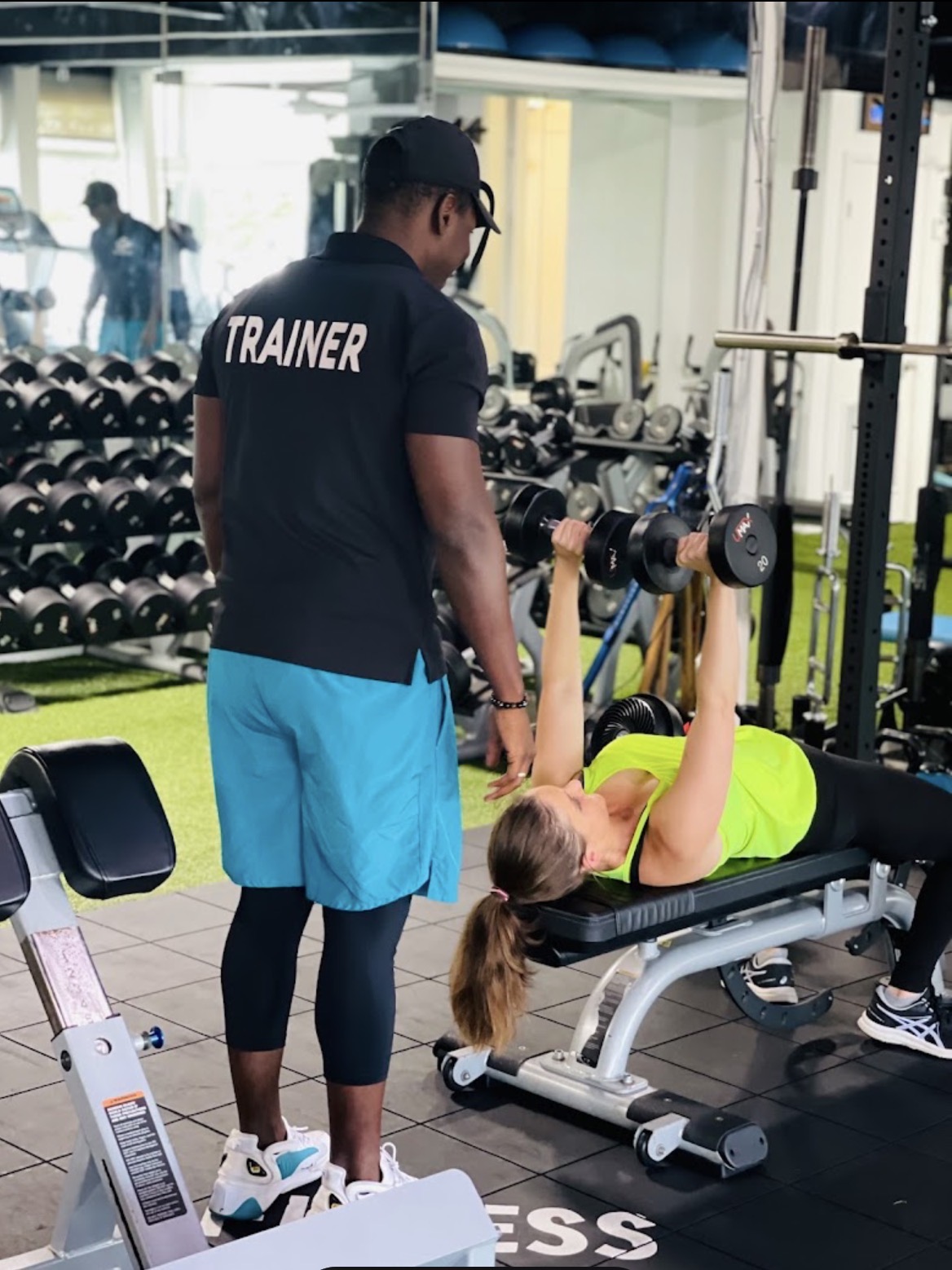
A theoretically ideal training time is not helpful if you regularly cancel it. For many A2A Fitness clients, morning coaching works because the session happens before meetings, family responsibilities and unexpected problems begin. Other clients feel stiff or rushed in the morning and perform better around lunch or in the afternoon.
The useful questions are practical:
- When can you attend reliably?
- When do you feel focused enough to train safely?
- When have you eaten and hydrated appropriately?
- Which appointment interferes least with sleep?
- When can you recover without rushing into another obligation?
The answers may point to 7:00 a.m., 11:30 a.m. or 4:00 p.m. All can work when the program itself is sound.
Morning strength training after 45
Morning sessions can be an excellent fit for professionals who want to protect their training time before the workday takes over. The main challenge is that joints and muscles may initially feel stiffer. That does not automatically make morning training unsafe; it means the preparation should match the client.
A morning session might begin with easy cyclical movement, ankle and hip mobility, supported squats, light rows and presses, and gradually heavier preparation sets. Walking into the studio cold and immediately attempting a heavy working weight is unnecessary. Five to ten minutes of progressive preparation can improve comfort and movement quality.
Afternoon and evening training
Some clients naturally feel stronger later in the day after eating, moving and becoming mentally alert. An afternoon session can work especially well for someone with flexible hours or a reliable break in the workday.
Evening training can also work, although very intense sessions close to bedtime may affect sleep for certain people. If late sessions leave someone alert for hours, the program can use slightly less conditioning, a longer cooldown or an earlier appointment. Changing from morning to evening solely to chase extra muscle or strength is probably unnecessary.
The quality of the program matters more than the clock
Training at the “right” time cannot rescue a poor program. Adults over 45 still need progressive resistance, appropriate exercise selection, sufficient recovery and measurable goals. A balanced plan commonly includes a squat or step pattern, a hip hinge, upper-body pushing and pulling, carries, trunk strength, balance, controlled power and mobility for the ranges the client actually needs.
The exercises should gradually become more demanding as technique and tolerance improve. Remaining permanently on very easy weights because of age can limit progress just as surely as progressing too aggressively.
At A2A Fitness, the goal is not to train every 45+ client identically. It is to identify the dose that challenges the individual without making joint irritation or poor recovery the limiting factor.
Strength and cardiovascular work can share a session
A large 2026 research review found that aerobic, resistance and combined exercise reduced resting blood pressure in middle-aged and older adults. Circuit and combined training appeared promising, although the evidence was not strong enough to declare one method universally superior.
For a private client, this can mean pairing strength work with controlled carries, low-impact step patterns, cycling or walking. The session should feel purposeful—not like an exhausting race between exercises. Someone managing hypertension, cardiovascular disease, dizziness or significant shortness of breath should receive appropriate medical guidance.
A practical weekly schedule
A strong starting structure for many Boca Raton adults is two coached full-body strength sessions, two or more moderate walking, cycling or swimming sessions, short mobility practice on most days and at least one easier recovery day.
Thirty-minute sessions can prioritize four major movement patterns and a brief carry or conditioning finish. Sixty-minute sessions allow additional preparation, accessory strength, balance, power and cardiovascular work. The best schedule is the one that produces months of quality training—not one perfect week followed by three weeks of inconsistency.
Build a schedule around your life
Rodney Pierre brings more than 15 years of coaching experience and a Sports Medicine background to A2A Fitness. Private coaching is designed for adults who want to regain strength, improve mobility and feel athletic again without being placed into a generic age-based workout.
Request your private assessment →
Explore Strength & Mobility After 45, one-on-one training, partner training, or mobility coaching.
Research sources
- Daily rhythm-aligned resistance training randomized trial
- Exercise modality and blood-pressure network meta-analysis
- American Heart Association adult activity recommendations
Evidence disclaimer: This article provides general fitness education, not medical diagnosis or treatment. Individual responses vary. Clients with cardiovascular conditions, uncontrolled blood pressure, concerning symptoms or recent procedures should obtain appropriate medical guidance before beginning or intensifying exercise.