
Walking is one of the best places to begin improving fitness after 45. It is accessible, familiar and easy to fit around work, family and travel. But there is an important difference between taking a comfortable stroll and completing a purposeful walking workout.
New research suggests some older adults may improve stamina and mobility more when walking includes an appropriate challenge. That does not mean every walk needs to feel hard. It means that once a person has the necessary health, strength and movement capacity, brief periods above an everyday pace may provide a more useful training stimulus.
For adults in Boca Raton, Delray Beach, Deerfield Beach, Highland Beach, Parkland and nearby communities, the goal is not simply to collect steps. It is to build the capacity to move through life with more strength, speed and confidence.
What new walking research found
A 2026 randomized trial studied adults ages 62–96 who were classified as pre-frail or frail. Researchers compared supervised higher-intensity walking with casual-speed walking.
Both groups trained for 45 minutes, three times per week, for 16 weeks. The faster group worked toward a vigorous effort, while the casual group remained below a moderate threshold.
Among participants included in the final analysis, 69.6% of the higher-intensity group improved by at least one frailty category, compared with 46.4% of casual walkers. The faster group also gained approximately 0.08 meters per second more usual walking speed and covered about 49 additional meters during a six-minute walk test.
Those results are encouraging, particularly because the participants’ average age was about 79 and 65% used a walking aid.
The study also requires caution. Sixty of 165 enrolled participants did not enter the final analytic group. When researchers used conservative assumptions for those missing participants, the frailty result was no longer statistically conclusive. Every session was individually supervised, so this was not the same as telling someone to walk as fast as possible on an unsupervised route.
A walk and a walking workout are not identical
A comfortable walk still has value. It can support recovery, increase daily movement, provide social connection and reduce sitting time.
A walking workout has a more specific purpose. It deliberately changes one or more variables:
- Pace
- Duration
- Incline
- Interval structure
- Arm action
- Terrain
- Recovery time
Someone might walk comfortably for three minutes, increase to a purposeful pace for one minute and then return to the easier speed. Another person may use a treadmill incline without substantially increasing speed. A client with joint irritation might train on a bike or another low-impact option instead. The method matters less than creating a manageable challenge.
Why strength still matters for better walking
Walking faster requires more than cardiovascular fitness. Your legs must produce force quickly enough to move your body forward. Your trunk must control your posture, and your feet and hips must manage each step.
That is why walking alone may not restore every ability adults lose with age. A complete program should develop lower-body strength for rising and climbing, calf and ankle capacity for push-off, hip strength for single-leg control, trunk stability, balance during changes in direction and aerobic capacity for sustained activity.
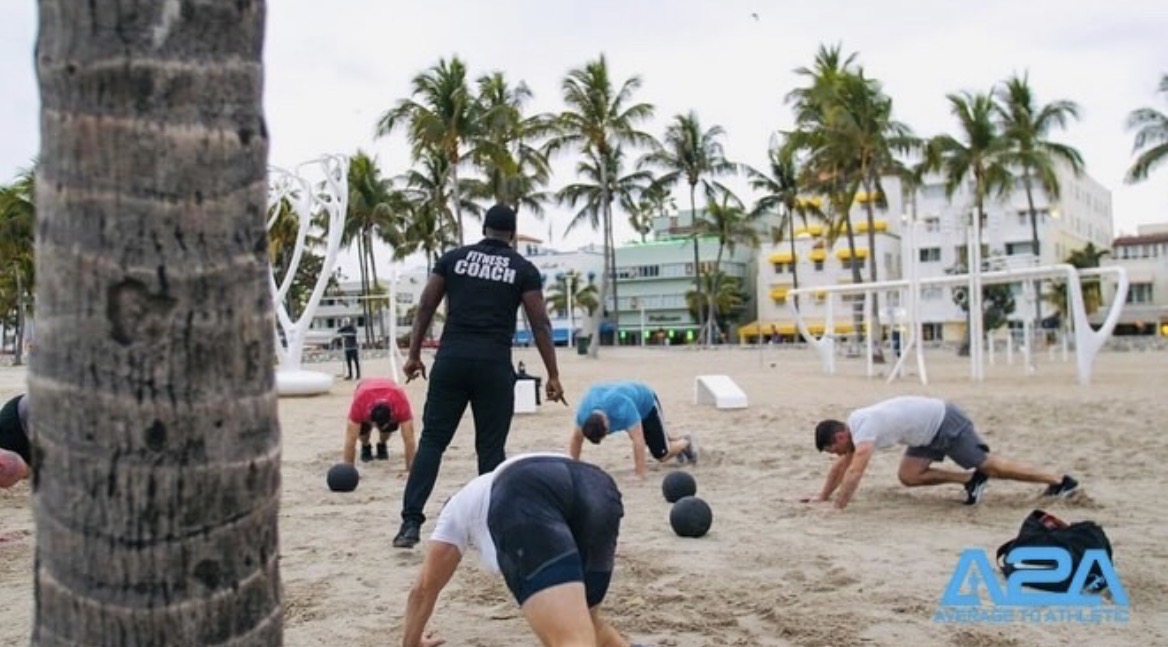
At A2A Fitness, walking intervals can complement squats, step-ups, hinges, rows, presses and loaded carries. They are not a substitute for progressive strength training.
How to begin brisk walking safely
Establish a comfortable baseline
Before adding speed, determine how long you can walk comfortably and how your body responds later that day and the following morning. A coach may observe posture, stride consistency, foot clearance, turning, breathing and symptoms. That provides more useful information than an arbitrary step goal.
Add short intervals
A practical starting workout might include a five-minute easy warm-up, five rounds of one minute of purposeful walking, one to two minutes of comfortable recovery after each round, and a five-minute cooldown.
“Purposeful” should feel clearly faster than normal but still controlled. You should not be stumbling, straining or holding your breath. Progress by adding a small amount of time, pace or incline—not all three simultaneously.
Use effort as well as heart rate
Heart-rate targets can help, but medications and individual differences affect the response. Beta blockers, for example, may prevent heart rate from rising as expected.
A simple effort scale is useful. If zero is complete rest and ten is an all-out effort, many clients can begin intervals around five or six. Higher efforts require greater preparation, screening and supervision. Safe mechanics and the ability to communicate in short phrases should remain intact.
Walking with knee or back discomfort
Pain does not automatically mean all walking must stop, but it should change how activity is managed. Another recent randomized study included adults age 65+ with mild-to-moderate knee or lower-back pain. A 12-week exercise program showed a possible improvement in real-world step length without clearly increasing total daily steps or distance.
The step-length result weakened during sensitivity analyses, so it is an early signal rather than proof. It still highlights an important coaching point: progress is not always visible on a step counter.
Useful improvements might include a smoother stride, less hesitation, better speed, more even steps, greater tolerance for errands, less discomfort after activity and more confidence on stairs or uneven ground.
Pain that becomes progressively sharper, changes coordination, radiates into an arm or leg, or is accompanied by unexplained weakness requires appropriate professional evaluation. Coaching should complement medical care or physical therapy when those services are needed.
A practical week for improving walking capacity
A balanced starting week might include two coached full-body strength sessions, one structured interval walk, two or three comfortable walks, short mobility work for the ankles, hips and upper back, and at least one easier recovery day.
A 30-minute coaching appointment can combine a focused strength circuit with five to seven minutes of aerobic intervals. A 60-minute session allows more movement preparation, progressive strength work and a longer conditioning block. For partner sessions, each person can use a different speed, incline or work-to-rest ratio.
More steps are not the only goal
Wearables are useful, but daily step count cannot tell you everything about physical capacity. Ten thousand slow, uncomfortable steps are not automatically better than fewer well-tolerated steps combined with strength training and purposeful intervals. The right target depends on current fitness, health conditions, schedule and recovery.
Turn walking into a complete longevity plan
Rodney Pierre brings more than 15 years of coaching experience and a Sports Medicine background to A2A Fitness. Private coaching helps adults over 45 rebuild strength, mobility and conditioning without being forced into a generic workout based solely on age.
Request your private assessment →
Explore Strength & Mobility After 45, private coaching, partner training, or pain-aware mobility.
Research sources
- High-intensity versus casual-speed walking randomized trial
- Exercise for physical and cognitive function in frailty: systematic review
- Hybrid exercise and real-world walking with knee or back pain
Evidence disclaimer: This article provides general fitness education, not medical diagnosis or individualized treatment. Research findings may not apply to every person. Adults with unstable cardiovascular disease, unexplained symptoms, recent falls or significant mobility limitations should obtain appropriate medical guidance before beginning vigorous walking.